Claude Agent SDK vs LangGraph: The Real Cost
The “25x more tokens” stat everyone quotes ignores cache reads, which makes it about 4-5x, or cents per run. The real decision is durable execution versus an inherited harness.
Read Full ArticleInsights on AI automation, Hyros attribution, and n8n workflows

The “25x more tokens” stat everyone quotes ignores cache reads, which makes it about 4-5x, or cents per run. The real decision is durable execution versus an inherited harness.
Read Full Article

No surcharge isn’t the same as free. The per-turn cost math, the tokenizer change that quietly broke everyone’s estimates, and why a loop allowed to grow to 1M gets worse at its job.
Read Article

Data Tables are for rows that only serve your workflows — Postgres is for everything a human will eventually query. The 200 MiB instance-wide cap, the Code node gap, and the export that leaves your table behind.
Read Article

Metadata Filter only exists in Get Many mode — so an agent using a native vector tool searches your whole collection every time. Why pgvector wins by default, and the three ways to get scoped retrieval anyway.
Read Article
Streaming is two switches, not one — and n8n never tells you when one is off. The six reasons your agent still returns one blob at the end, including the buffering proxy that makes it work on localhost and fail on your domain.
Read Article

The approval link is a bearer token, the gate belongs to the tool rather than the agent, and a waiting execution never turns red. Five ways n8n human-in-the-loop approvals fail in production — and the gate I run instead.
Read Article
Webhook retries are at-least-once by design, and the Remove Duplicates node is a filter rather than a lock. Here is the atomic idempotency gate that holds under queue mode — plus the two-phase trick that stops it turning duplicates into silent data loss.
Read Article
Workflow limits are gone, so the old reason to self-host died with them. What you actually buy now is executions and concurrency — with real numbers pulled off my own production instance and the one plan cliff that decides everything.
Read Article

Access asks every caller to prove it is a person, and a webhook has no answer, so the delivery dies at the edge. Service tokens with a Service Auth policy, a Bypass scoped to the webhook path, and the split-hostname setup that ends the problem for good.

Read Article

Your container writes, the sharing layer reorders, and one morning the storage engine can't read its own file. Why bind mounts across the Docker Desktop VM boundary break Postgres and Mongo, the four-step migration to named volumes, and how to put Docker on an external SSD without a blank disk image after reboot.
Read Article

Your MCP tool works locally and dies behind the proxy. The Tasks extension answers tools/call with a claim ticket instead of a result — taskId, pollIntervalMs, five states — plus what breaks if you built against the 2025-11-25 experimental version.
Read ArticleAn agent buys through your API, not a browser, so no pixel ever fires and the revenue lands in your reports as nothing. Two separate failures, only one fixable — plus the server-side pipeline that recovers it and the part no vendor can sell you back.
Read Article
One exposes your entire n8n instance to an AI client, the other exposes a single workflow. Since April 29 2026 the built-in server can build workflows, not just run them — plus the silent version gates and the queue-mode routing rule that keeps SSE from dropping.
Read Article

output_config.format constrains the answer, strict:true constrains the tool call — they're not alternatives. Plus the unsupported keywords that make your Pydantic model bounce, and why changing the schema nukes your prompt cache.
Read Article

Server-side summarization for long Claude conversations — the exact config, the one line that silently breaks it, the billing trap that under-reports a compacting turn by 8x, and when context editing is the cheaper choice.
Read Article

SEP-2577 deprecated Sampling, Roots and Logging in spec 2026-07-28. Elicitation survived — here's why, the delivery change that breaks blocking tool handlers, and the phishing attack sitting inside URL mode.
Read Article

It's three limits, not one — and the fix almost nobody mentions is prompt caching, because cached input tokens don't count toward your ITPM ceiling. Plus the header you're throwing away that would let you throttle before the 429 ever fires.

Read Article
Both let a manager agent delegate to specialists. Only one gives you an execution you can retry, reuse and test on its own. That's the whole decision — plus the sub-node trap that makes both silently process only your first item.
Read Article
Writes are locked to your working directory. Reads are not — a sandboxed command can still open ~/.ssh and ~/.aws/credentials. Here's the real boundary, the settings.json that closes the gap, and the five options that quietly undo it.
Read Article
An MCP tool description is prompt text your agent reads as instructions and you never see — which is why no system prompt fixes it. The four structural controls that do: per-tool allowlists, pinned versions with description hashes diffed in CI, credentials the model can't read, and a container with --network none.
Read Article
A marketplace is a git repo with one JSON file in it — no server, and your git host is the access-control layer. The full setup, plus the two traps: private HTTPS auto-updates that fail silently, and the optional version field that ships every commit to your whole team.
Read Article
n8n gates Git source control behind the Business plan at roughly €800/month. The public REST API ships on every plan and covers most of it — export, normalize so the diffs are readable, commit on a cron. Plus the two things no plan can save you: credentials and the restore path.
Read Article
n8n tells you what a node did. It won't tell you why the agent picked that tool, or what the detour cost. Two ways to pipe n8n runs into Langfuse — the HTTP Request node that ships today, and the OpenTelemetry route that gives you a span per node — plus what self-hosting ClickHouse really costs you.
Read Article
The OAuth 2.1 handshake in four steps — 401 with WWW-Authenticate, protected resource metadata, PKCE with a resource parameter, and the audience check most implementations skip — plus the proxy service-token shortcut I actually run for private servers.
Read Article
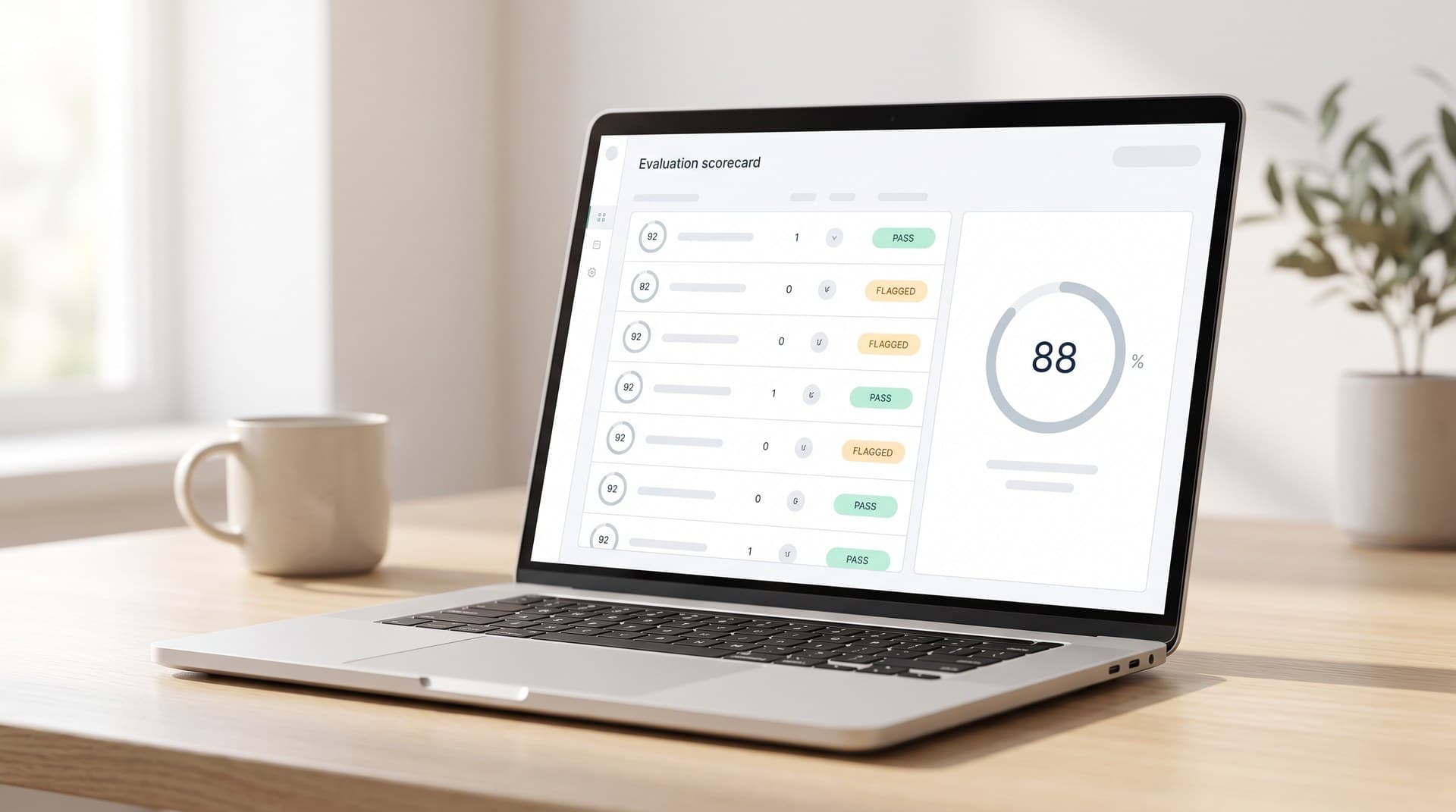
An n8n AI agent evaluation is four pieces: a dataset of real test cases in a Data Table or Google Sheet, an Evaluation Trigger node that replays every row through the live workflow, an Evaluation node that scores the answer, and a threshold you refuse to ship below.
Read Article
Claude skills and subagents solve two different problems, and mixing them up is the fastest way to waste context. A skill is reusable instructions loaded into your current conversation — same model, same context, no isolation; it changes how the agent you're already talking to behaves.
Read Article
MCP Apps are the first official Model Context Protocol extension (shipped Jan 26, 2026): an MCP tool can now return a real interface — a dashboard, form, chart, or multi-step wizard — that the client renders in a sandboxed iframe right inside the chat, instead of plain text.
Read Article
The biggest lever on whether a Claude agent calls the right tool isn't the model — it's how you write the tools.
Read Article
For most agent tasks a CLI is 4–32× cheaper than an MCP server — 1,365–8,750 tokens per task instead of 32,000–82,000 — because every connected MCP server injects all of its tool definitions into every turn, used or not. 20.
Read Article
The Claude Batch API (Message Batches API) bills input AND output at 50% off for async work that finishes within 24 hours — most batches land in under an hour. 50.
Read Article
The Claude memory tool (memory_20250818) lets an agent create, read, update, and delete files in a persistent /memories directory across conversations — client-side, all Claude 4+ models, GA on the Messages API with no beta header.
Read Article
Default n8n runs the editor, webhooks, and every execution in one Node process — it works until the UI crawls during runs and webhooks drop under load. The signal to move is the main process pinned near 80% CPU; the fix is queue mode: a main instance, a Redis broker, and dedicated workers on Postgres.
Read Article
8 usually finishes hard, open-ended work in fewer tokens and fewer retries — so the number that decides it is cost-per-completed-task, not cost-per-million. 8 for the hard tail.
Read Article
They're not competitors — Claude Code builds software, n8n runs operations. The one-line test: if you can draw the task as fixed boxes before running it, it's n8n; if the path is discovered by reasoning, it's Claude Code.
Read Article
Hooks are shell commands that fire automatically at lifecycle events — so you enforce a rule instead of hoping the model remembers it. A prompt is a suggestion; a PreToolUse hook is a wall the agent can't walk through.
Read Article
2x multiplier. The reason nobody mentions: a subagent starts cold and can't inherit the parent's cached prompt prefix, so it re-buys the same context at the uncached rate.
Read Article
A Hyros OG's honest call: they don't compete, they measure different money. Pick Hyros for high-ticket, call-driven funnels that need per-lead attribution to closed CRM revenue; pick Triple Whale for DTC Shopify stores that live on a fast blended-ROAS dashboard.
Read Article
From someone who deploys both: pick Retell for a managed, low-latency agent with one predictable bill; pick Vapi when you're a developer who wants control over every provider. 07 advertised), a full comparison table, and the decision rule I use — who owns it after launch.
Read Article
A skill is knowledge, an MCP server is a connection — use a skill to teach the model how, use MCP to let it reach a system it can't otherwise touch. The tiebreaker most people skip is token cost: skills sit idle at ~30–100 tokens each, while five MCP servers can burn ~55k tokens before you type a word.
Read Article
A dynamic workflow is a script Claude writes to orchestrate subagents in the background, keeping the plan out of your context window. The three primitives (agent, parallel, pipeline), why pipeline beats parallel by default, the caps that stop a runaway, and what a fan-out really costs — from production runs.
Read Article
Cached input tokens cost 10% of the base price — a 90% discount that pays for itself after a single cache hit. 1x read), the prompt reordering that took my cache hit rate from ~20% to 80%+, and the silent mistakes that kill your cache in production.
Read Article
Postgres or Redis for n8n AI agent memory? Default to Postgres Chat Memory for durable, queryable history; add Redis only when you truly need fast session context at concurrency. My decision rule, a head-to-head table, and the session-key bug that breaks memory more often than the database ever does.
Read Article
The Claude Agent SDK hands you Claude Code's agent loop, tools, subagents, and sessions as a library; the raw Anthropic API makes you build that yourself. The exact rule I use to decide — with production numbers from agents I run daily.
Read Article
MCP servers spend tokens before your agent says a word — the GitHub MCP alone loads ~55,000 tokens of tool definitions. How I measure the context tax, what it costs per run, and the four controls I use to cut it in production.
Read Article
An AI agent on autopilot will spend real money whether or not it does real work. The four controls I wire into every loop — a hard token budget that aborts, model routing so the expensive model only touches the hard steps, state-based dedup, and a failure kill-switch — plus the 94-hour weekend that taught me why.
Read Article
ComfyUI gives you total control over Stable Diffusion — and total responsibility for getting it right. After months of production renders on an RTX 5090: where detail really comes from, FaceDetailer tuning for tack-sharp eyes, LoRA OOM fixes, and reusable workflow presets.
Read Article
After testing Retell and building voice automations in n8n, I've hit the hard ceiling: voice AI crushes scheduling and qualification, but fails on objection handling. Here's where I deploy it and where I don't.
Read Article
Three production agents. Zero error logs. All delivering garbage output. The root cause was the same every time: prompt engineering solving problems that need deterministic code.
Read Article
I tested computer use vs. structured APIs on a real n8n workflow. Real numbers: $1,847 Anthropic invoice vs. $41/month rebuild. Token cost breakdown and the API-first setup that saved $1,200/month.
Read Article
n8n's native Microsoft 365 Agent integration lets you deploy AI agents that appear as real team members in Teams and Outlook. Full walkthrough: Azure registration, Claude Haiku extraction, Teams Adaptive Cards.
Read Article
Most agencies under-report story conversions by 30–60%. Here's the complete Hyros OG fix: server-side tracking, UTM config, Meta CAPI setup, and multi-touch attribution model settings.
Read Article
My complete AI agent toolchain: OpenClaw, OpenMOSS, n8n, Claude, Retell AI, Supabase, and Vercel. Real code, real architecture, real production stack.
Read Article
One webhook, any lead source, zero duplicates. Connect Retell AI, Typeform, and Meta Ads leads into a single Postgres table — with RLS, deduplication, and Claude Haiku scoring.
Read Article
My n8n workflow that monitors Upwork every 15 minutes, scores jobs with Claude AI, and drafts custom proposals automatically — the exact setup running in production for 90 days.
Read Article
How I deployed an AI voice agent for a roofing contractor using Retell AI + Claude. Answers every inbound call 24/7, qualifies storm damage leads, and books inspections — $73/month vs. $380/month answering service.
Read Article
Write once, publish everywhere — automatically. Connect n8n to the Claude API so your content gets reformatted and posted to Twitter, LinkedIn, and Telegram without you touching a keyboard.
Read Article
Cloud agent platforms add 300–800ms of latency and bill per call. OpenClaw routes tasks to specialized agents in under 10ms — on my own hardware, zero routing cost.
Read Article
After running 11 agents in production for 3 months: real latency numbers, cost per task, tool use reliability rates, and a decision framework for when Opus is actually worth the 5x price.
Read Article
Real numbers from 11 production agents: prompt caching, model tiering (Haiku/Sonnet/Opus), request batching, and prompt compression — with before/after cost breakdowns.
Read Article
Real workflow: new Monday item → Claude AI scoring → auto-assign to the right agent → Telegram alert. Full JSON template included so you can import and run it today.
Read Article
How I built the first Hyros MCP (Model Context Protocol) server that lets Claude, Cursor, and any AI assistant query and manage Hyros data directly. Released March 2026, 100 installs in 24 hours.
Read Article
How I built and published a community Hyros node for n8n. What it does, how to install it, and why thousands of marketers are using it to automate attribution tracking.
Read Article
How I installed OpenMOSS to coordinate 11+ AI agents running autonomously — claim → execute → submit pattern, agent registry, full architecture breakdown.
Read Article
Gemini 3.1 Pro scores 77.1% on ARC-AGI-2. Real-world comparison vs Claude Sonnet 4.6, API pricing breakdown, and code examples for production AI systems.
Read Article
How I created multi-agent systems for call screening and content generation using Claude Sonnet 4.6 and Retell. From prompt engineering to deployment.
Read Article
Practical advice from a Hyros OG: Server-side setup, multi-touch attribution, integration with n8n for reporting. Boost ROAS without overcomplicating.
Read Article
The workflow patterns, error-handling tricks, and node combos I reuse across every agency engagement — a practical n8n tutorial built from 200+ production workflows.
Read Article
Complete setup guide for Retell AI voice agents: conversation flows, Claude integration, Supabase logging, cost optimization from $0.10 to $0.05/minute.
Read ArticleSubscribe for weekly updates on AI automation, Hyros strategies, and n8n tips from Allen, TX. More posts coming: Voice AI case studies, Upwork automation.
Get In Touch